Executive Summary
Digital twins are emerging as a powerful technology for pharmaceutical companies seeking to make drug development more predictive, data-driven, and efficient.
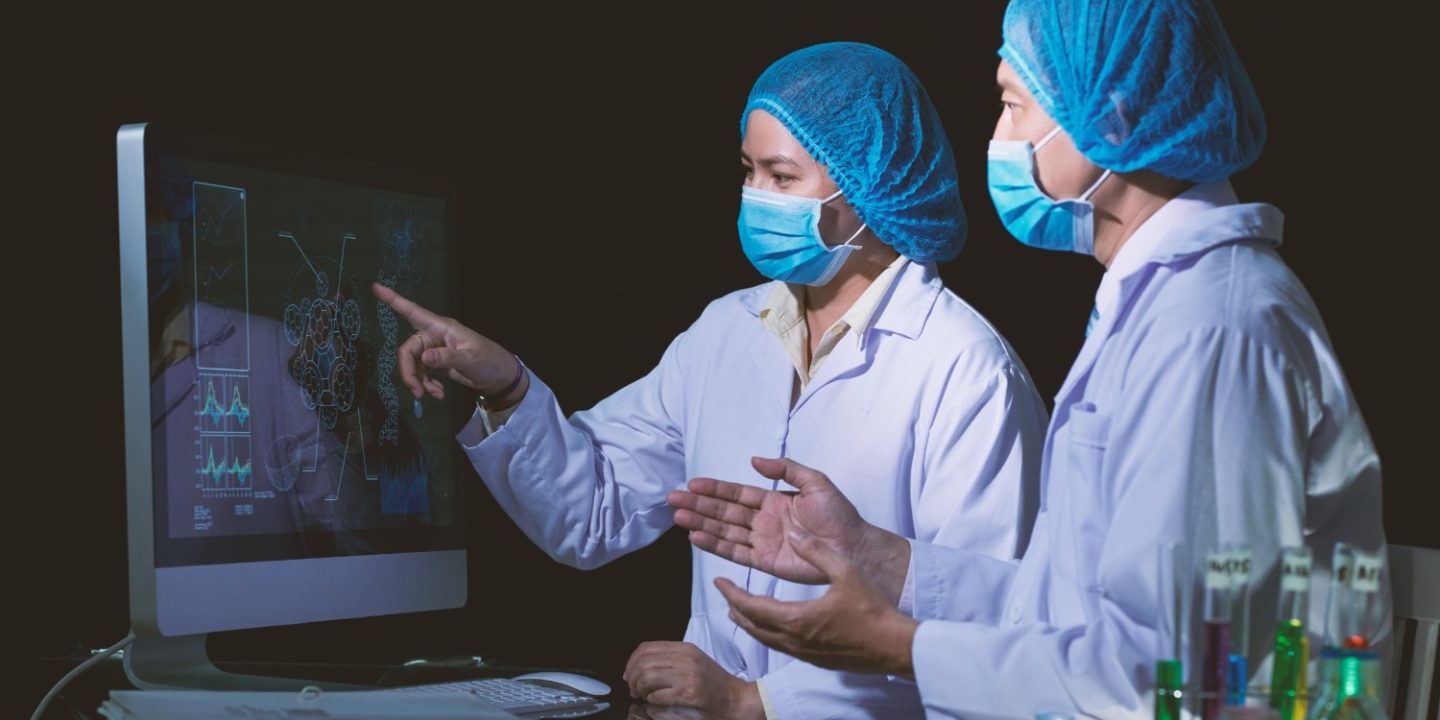
A digital twin is a virtual representation of a real-world system that is continuously informed by data. In drug development, that system could be a molecule, biological pathway, disease process, patient, clinical trial, manufacturing process, or even an entire production facility.
Unlike a static computer model, a digital twin is designed to evolve as new data becomes available. This allows researchers to simulate scenarios, test assumptions, identify potential risks, and generate insights before committing resources to physical experiments.
The technology does not eliminate laboratory research or clinical trials. Instead, it can complement them by helping researchers determine what to test, which scenarios deserve attention, and where uncertainty is greatest.
As artificial intelligence, real-world evidence, computational biology, and connected data infrastructure continue to advance, digital twins could become an important part of pharmaceutical R&D.
The biggest opportunity may be creating a continuous feedback loop in which virtual simulations inform real-world experiments, while experimental results continuously improve the digital model.
What Is a Digital Twin?
A digital twin is a dynamic virtual representation of a physical object, process, system, or environment.
The concept originated in engineering and manufacturing, where digital models can replicate equipment or production processes and use real-time data to monitor performance and predict potential problems.
In healthcare and life sciences, the concept is more complex.
A pharmaceutical digital twin may combine multiple data sources and computational models to represent a biological or operational system. Depending on its purpose, it could incorporate molecular information, physiological measurements, clinical records, imaging, laboratory results, or manufacturing data.
The defining characteristic is the connection between the digital model and its real-world counterpart.
As new information becomes available, the model can potentially be updated, improving its ability to represent changing conditions.
How Are Digital Twins Different From Traditional Models?
Traditional computational models are already widely used in pharmaceutical research.
Researchers use mathematical models, simulations, pharmacokinetic models, computational chemistry, and statistical methods to predict biological and clinical outcomes.
A digital twin builds on these capabilities but aims to create a more dynamic and continuously updated representation.
A traditional model might answer a specific question using a defined dataset.
A digital twin can potentially evolve as new data arrives and support repeated simulations throughout the lifecycle of the system being represented.
This distinction is important because pharmaceutical development generates data continuously.
A clinical trial produces new patient observations. Manufacturing equipment generates operational data. Laboratory experiments create new evidence. A digital twin can potentially incorporate these inputs to improve subsequent predictions.
How Can Digital Twins Be Used in Drug Discovery?
Drug discovery is one of the areas where digital twins could have significant long-term potential.
Researchers must evaluate enormous numbers of potential compounds and determine how they interact with biological targets.
Digital models can help simulate molecular interactions, predict compound behavior, and evaluate potential candidates before extensive laboratory testing.
A digital twin could potentially integrate information about a target, disease pathway, candidate molecule, and experimental results.
Combined with AI, this could help researchers identify promising candidates and prioritize experiments.
Potential applications include:
- Target validation
- Molecular design and optimization
- Drug-target interaction modeling
- Pharmacokinetic prediction
- Toxicity assessment
- Candidate prioritization
The objective is not to replace laboratory science. It is to make laboratory experimentation more focused.
Can Digital Twins Represent Patients?
Patient-level digital twins are among the most ambitious applications of the technology.
A patient digital twin could potentially integrate genomic data, clinical history, laboratory results, imaging, physiological measurements, treatment history, and other relevant information.
The resulting model could be used to explore how a patient might respond to different treatments or how disease progression could change under different conditions.
This has important implications for precision medicine.
However, creating an accurate digital representation of a human being is extremely difficult. Biology involves complex interactions that cannot yet be captured completely.
For this reason, patient digital twins should currently be viewed as decision-support tools rather than replacements for physicians, clinical trials, or real-world patient care.
How Could Digital Twins Improve Clinical Trials?
Clinical trials generate enormous amounts of information, but much of that information is used after events have already occurred.
Digital twins could help sponsors use data more proactively.
Virtual patient populations could potentially be used to evaluate trial scenarios, examine eligibility criteria, estimate enrollment, and explore possible outcomes.
During a study, continuously updated models could potentially help identify emerging patterns and support operational decision-making.
Applications could include:
- Trial design
- Patient stratification
- Recruitment planning
- Site selection
- Dose optimization
- Outcome prediction
- Trial monitoring
The greatest value could come from identifying potential problems earlier, when sponsors still have an opportunity to respond.
What Role Do Digital Twins Play in Precision Medicine?
Precision medicine depends on understanding how individual biological differences influence treatment response.
Digital twins could support this objective by integrating multiple forms of patient data into a unified computational representation.
Instead of considering a patient’s genomic profile, clinical history, imaging, and laboratory results separately, a digital twin could help researchers analyze how these factors interact.
Over time, increasingly sophisticated models could potentially simulate different treatment scenarios and identify which approaches may be most appropriate for particular patient characteristics.
This could help move precision medicine from a primarily descriptive approach toward a more predictive one.
How Are Digital Twins Used in Pharmaceutical Manufacturing?
Manufacturing may offer some of the most immediate applications for digital twins.
Pharmaceutical facilities contain equipment and processes that generate large quantities of operational data.
A digital twin can represent production processes and simulate different operating conditions without disrupting the physical system.
Manufacturers could use these models to evaluate equipment performance, production capacity, maintenance requirements, process changes, and potential quality risks.
This creates an opportunity to move from reactive operations toward predictive manufacturing.
Instead of waiting for equipment failure or process deviations, companies could potentially identify warning signs earlier and evaluate corrective actions virtually.
Why Are AI and Digital Twins Becoming More Important Together?
Artificial intelligence and digital twins address different parts of the same challenge.
AI is highly effective at identifying patterns and generating predictions from large datasets. Digital twins provide a virtual environment where those predictions can be tested against simulated scenarios.
Together, they can create a continuous learning cycle:
Real-world data → AI analysis → Digital simulation → Decision → Real-world action → New data
This cycle can become increasingly powerful as more data becomes available.
AI can improve the intelligence of the digital twin, while the digital twin can provide context for AI predictions.
What Data Does a Pharmaceutical Digital Twin Need?
The quality of a digital twin depends heavily on the quality of the data supporting it.
Depending on its purpose, a pharmaceutical digital twin could use:
- Genomic and molecular data
- Clinical and laboratory data
- Imaging data
- Real-world evidence
- Patient-generated data
- Manufacturing and sensor data
- Historical experimental results
However, simply collecting more information does not guarantee a better model.
Data must be accurate, interoperable, representative, appropriately governed, and available in formats that computational systems can use.
Data quality therefore becomes a strategic requirement for digital twin initiatives.
What Are the Biggest Challenges?
Digital twins face significant technical, scientific, and regulatory challenges.
The complexity of human biology makes patient-level modeling particularly difficult. Models can also produce misleading results if their underlying data is incomplete or biased.
Validation is another major issue. Pharmaceutical companies need to understand how accurately a digital twin represents the system it is intended to model and how uncertainty should be communicated.
Regulatory acceptance will also determine how extensively digital twins can influence drug development decisions.
Privacy and cybersecurity become increasingly important when models incorporate sensitive patient or proprietary pharmaceutical information.
What Should Pharma Leaders Do Now?
Pharmaceutical companies should approach digital twins as strategic capabilities rather than isolated technology projects.
The best starting point is a clearly defined business or scientific problem.
Manufacturing optimization, clinical trial planning, molecular modeling, and specific disease applications may provide more manageable starting points than attempting to build a comprehensive patient digital twin.
Organizations should also strengthen their data infrastructure, establish model governance, and develop expertise across AI, computational science, biology, and domain-specific operations.
The objective should be measurable value rather than adopting digital twins simply because the technology is emerging.
What Is the Future of Digital Twins in Drug Development?
The long-term potential of digital twins lies in connecting different stages of pharmaceutical development.
A future development environment could allow researchers to simulate molecules before synthesis, model clinical trials before enrollment, predict patient responses, and optimize manufacturing processes using continuously updated digital representations.
Physical experiments would remain essential, but their role could become more targeted.
Every experiment could generate new data that improves the corresponding digital model, while improved models help determine what should be tested next.
This creates a more adaptive approach to drug development.
Conclusion
A digital twin in drug development is more than a computer simulation. It is a dynamic, data-informed representation of a real-world biological, clinical, or operational system designed to support prediction and decision-making.
Its potential extends from drug discovery and clinical trials to precision medicine and pharmaceutical manufacturing.
The technology is still developing, and significant challenges remain around data quality, biological complexity, validation, privacy, and regulatory acceptance.
But the strategic opportunity is clear.
As pharmaceutical companies combine AI, real-world evidence, computational biology, and connected data platforms, digital twins could become an important foundation for a more predictive drug development model—one where virtual intelligence helps determine what to test in the physical world, and every real-world result makes the virtual model smarter.
What Is a Digital Twin in Drug Development?
A Drug Development digital twin is a computer-based representation of a biological system, patient, disease, or treatment process. It combines data, mathematical models, artificial intelligence, and machine learning to simulate how a system may respond to different interventions. Recent research highlights digital twins as a promising technology across the pharmaceutical research and development lifecycle.
How Digital Twins Support Drug Development
In Drug Development, digital twins can help researchers simulate biological processes and explore potential outcomes before conducting certain physical experiments. Models may represent individual patients, populations, disease progression, or other biological systems. This can help researchers evaluate different scenarios and identify promising strategies earlier.
Challenges for Drug Development Digital Twins
Despite their potential, digital twins still face important challenges in Drug Development. Data integration, model reliability, validation, privacy, interoperability, and regulatory acceptance must be addressed before these systems can become widely accepted as evidence-generating tools.
FDA and Digital Technologies in Drug Development
The FDA is actively supporting the development of digital health technologies for Drug Development. Its programs include work on digitally derived measures and technologies capable of collecting clinical information remotely and continuously. These efforts could contribute to the broader infrastructure needed for advanced digital models.
Future of Drug Development With Digital Twins
Digital twins are unlikely to replace laboratory research or conventional clinical trials. Instead, they may become complementary tools that help researchers make better decisions throughout Drug Development. As data quality, modeling methods, AI capabilities, and regulatory frameworks improve, digital twins could play a larger role in discovery, clinical research, manufacturing, and personalized medicine.
How Digital Twins Support Drug Development
In Drug Development, digital twins can help researchers simulate biological processes and explore potential outcomes before conducting certain physical experiments. Models may represent individual patients, populations, disease progression, or other biological systems. This can help researchers evaluate different scenarios and identify promising strategies earlier.
Digital Twins and Clinical Trials in Drug Development
One important application of Drug Development digital twins is clinical research. Virtual patient models can potentially be used to simulate treatment responses, investigate differences between patient groups, and support trial design. Researchers are also exploring how digital twins and causal inference could help make clinical trials more informative and efficient.
AI Makes Drug Development Digital Twins More Powerful
Artificial intelligence and machine learning can strengthen Drug Development digital twins by processing large and complex datasets. These technologies can help models learn from biological, clinical, and patient-level information, potentially improving predictions and supporting more personalized research approaches.
Benefits of Digital Twins for Drug Development
Digital twins could provide several potential advantages for Drug Development, including:
- Faster evaluation of development strategies
- Better understanding of disease progression
- Improved clinical trial planning
- More personalized treatment simulations
- Reduced uncertainty in research decisions
- Greater use of real-world and patient-generated data
- Opportunities to identify problems earlier in development
Research published in 2026 notes that digital twins could potentially accelerate timelines, reduce costs and failure rates, and improve the safety and effectiveness of new therapies.