A Kenyan man who is the first patient to be admitted to a hospital after landing at Nairobi International Airport with Ebola already had some of the classic symptoms – fever, chills, muscle pain, and bleeding under the skin.
Two days later, he was dead and public health officials had to determine how he came to travel through three countries without being picked up by multiple tests designed to block the spread of the ongoing outbreak in the Democratic Republic of Congo to neighbouring states.
Little is known about the man – who has not been identified – other than that he crossed the land from the city of Beni in northeastern Congo to Kampala, Uganda’s capital, where he spent one night before making his way to Kenya by plane.
The route involved crossing the Congo – Uganda border that has been closed since May.
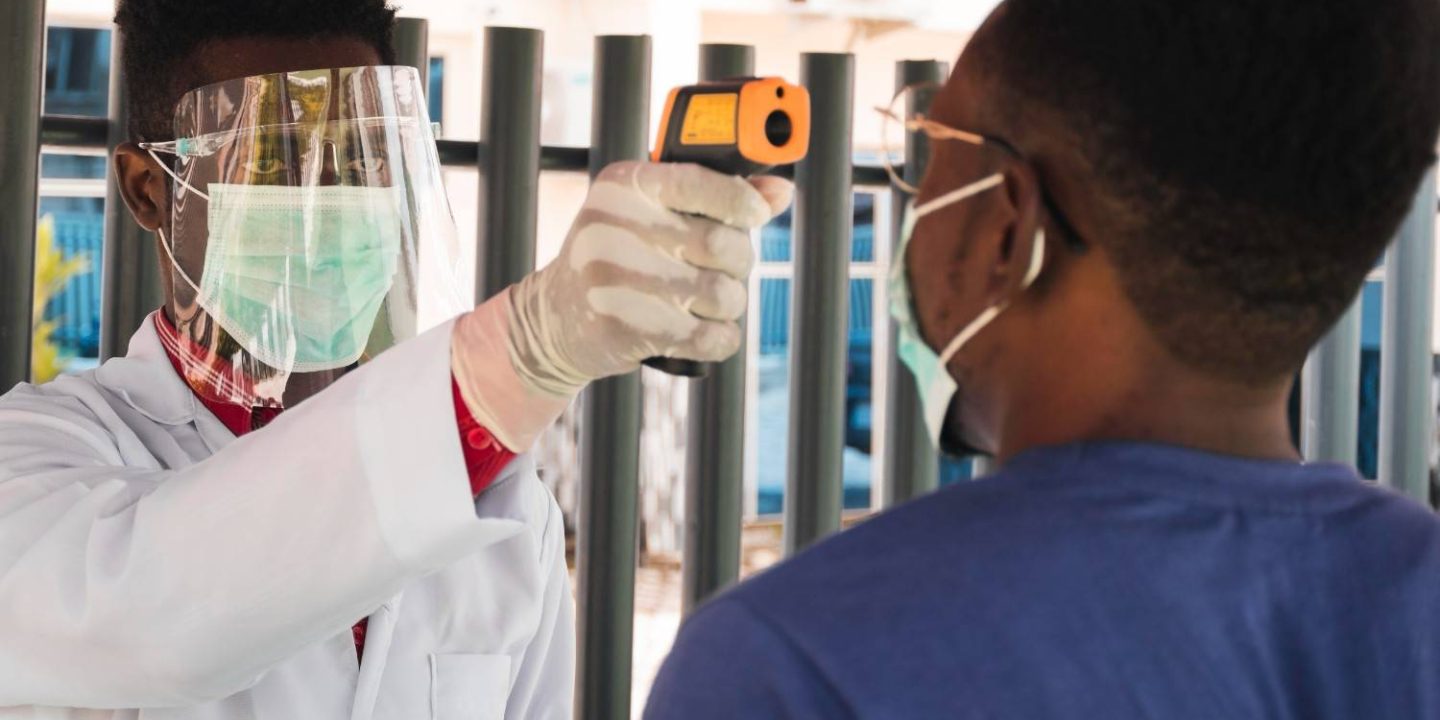
The man would also have needed to complete at least two digital forms to alert security officials of any possible exposure to Ebola in Congo, as well as pass through multiple temperature checks at the airports in Nairobi and Entebbe.
The case underscores the lapses in border screening systems in Africa and beyond that depend on effective implementation and honest disclosure on the part of travellers, according to health experts and officials who spoke to Reuters.
The need to increase screening processes, including the knowledge of how to ask the ‘right’ questions, Thomas Paerisch, a public health expert recently sent to Congo by medical charity Medecins Sans Frontieres, said.
With a POROUS BORDER CROSSING
The man had been residing in Congo for seven years, and he got sick there about a month before reaching Nairobi, Kenya’s Health Minister Aden Duale said, but he didn’t specify when the infection took place.
His recent travels had included a domestic flight within Congo’s three Ebola-affected provinces, and a road trip from Beni to Kampala, according to an Africa Centres for Disease Control and Prevention (ECDC) itinerary.
In late May, Uganda closed its borders with Congo to prevent the spread of Ebola following some cases from lesions traced back to people who had traveled from Congo. In late July, Uganda’s government announced the country was free of Ebola.
However, a source within the Ugandan health ministry who has participated in Ebola preparedness activities admitted it was impossible to make the border closure impermeable due to its porousness.
Uganda’s government spokesman Alan Kasujja has denied any responsibility for Kampala.
Leave Uganda out of this conversation – we don’t have Ebola here,” he wrote on X.
The man was “found with normal temperature” when screened at Entebbe airport, the health ministry said in a statement on Tuesday. He might have taken drugs to disguise his symptoms when he was examined at Nairobi airport, Kenyan authorities have said.
We are attempting to get the digital form he would have filled out at Entebbe airport as part of the thermal scanning procedure to find out what he would have reported on that form. A traveller’s recent health issues are featured in the form, as are recent travel to DRC, said Dr. Richard Mugahi, a senior Ugandan health official.
They are also looking at security camera footage from the airport to find out if they can identify who the driver of the car that dropped him there was, so they can trace any contacts in this area.
Duale, the health minister, said that 57 contacts had been listed, including 10 people who were quarantined, of the man who died in Kenya. However, the search for the remainder has been stepped up, he added.
Additionally, a special screening point for passengers coming from Congo and other countries with a potential risk of Ebola has been created at Nairobi’s Jomo Kenyatta International Airport, Duale added. Sometimes the symptoms of the illness are hard to detect.
The ongoing Ebola epidemic is the largest ever recorded in Congo, with over 4,000 deaths and 8,000 cases. It is caused by the rare virus Ebola, for which there is no treatment or vaccination available.
While some signs may be in the initial stages of the disease that are hard to notice, some medicines such as paracetamol can trick temperature checks, experts said.
Airport infrared thermometers are only measuring the temperature of the skin surface and not the core body temperature, meaning they wouldn’t detect all infections, said Kamran Khan, an infectious disease physician and professor at the University of Toronto.
Health declarations and visual screening are also part of the process, although the travellers might decide not to report symptoms.
Last month, Prosper Global Country Director, Rose Tchwenko, travelled from the Democratic Republic of Congo’s Kinshasa to Nairobi and stated that the surveillance was very minimal at both airports.
She was requested to complete an online health status and symptom questionnaire to create a QR code prior to boarding. Upon arrival, she was given a temperature test and provided with the QR code. The entire process lasts under two minutes, and you walk away; since then, I have not been contacted by anyone to find out if I have symptoms.
Ebola Case Raises Questions About Kenya’s Border Checks
A recent Ebola case in Kenya has raised serious concerns about the effectiveness of border screening and infectious disease surveillance across East Africa. In October 2026, Kenyan authorities confirmed the country’s first imported case of Bundibugyo Ebola virus disease in a citizen who had been living in the Democratic Republic of the Congo (DRC).
According to Kenya’s Ministry of Health, the patient travelled by road to Kampala, Uganda, before boarding a flight to Nairobi on October 3. After developing symptoms and receiving medical assessment, laboratory testing confirmed the infection. The patient later died, prompting authorities to begin contact tracing and strengthen public health measures.
The case has highlighted concerns about how a person with a serious infectious disease could travel across multiple borders and pass through airport screening before the infection was identified. It has also renewed questions about whether existing screening procedures are sufficient to identify travelers who may have been exposed to Ebola.
How Ebola Screening Systems Failed to Detect Risk
Border screening is an important part of controlling Ebola outbreaks, particularly when infections spread across countries with frequent cross-border travel. However, temperature checks and health declaration forms cannot identify every infected traveler.