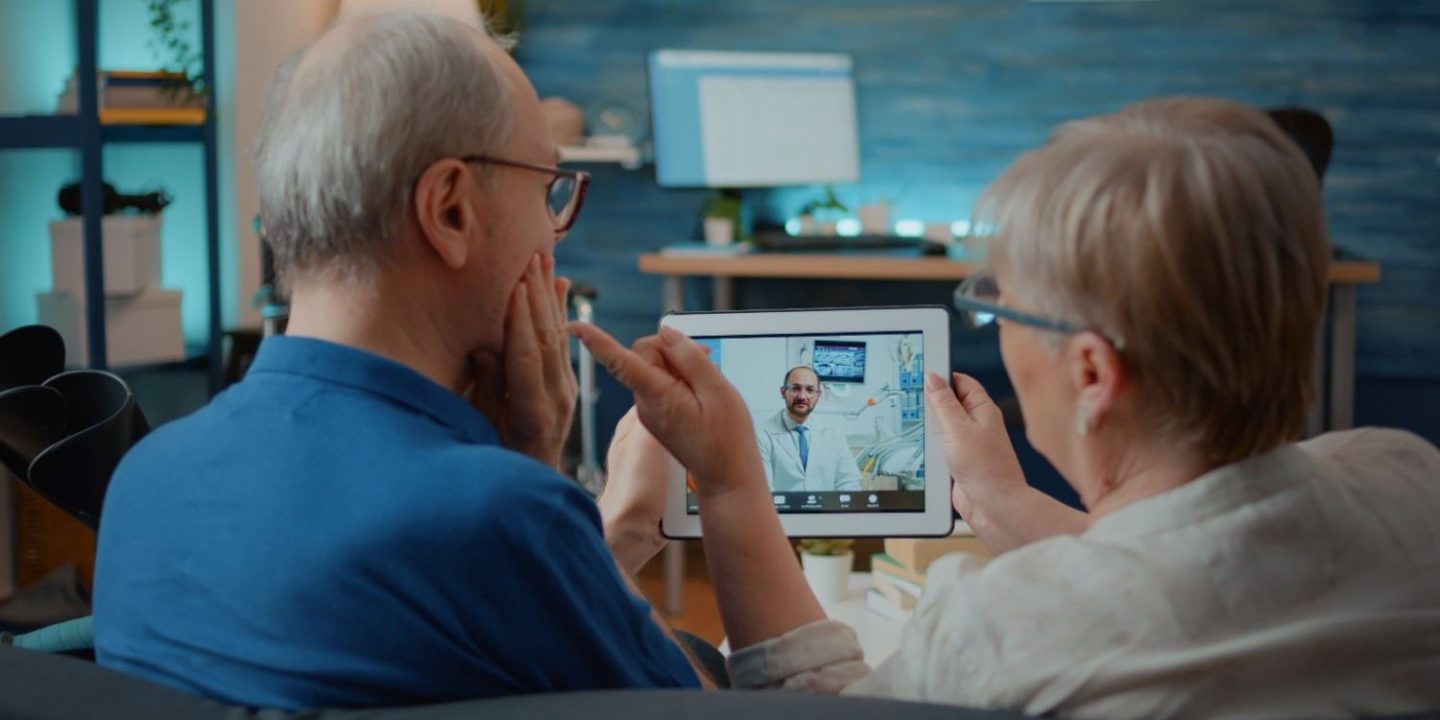
Executive Summary
Clinical documentation has become a significant source of administrative burden for healthcare professionals. Physicians must capture patient histories, record assessments, document treatment decisions, and complete electronic health record (EHR) requirements while maintaining meaningful interactions with patients. The resulting workload can contribute to longer working hours, fragmented attention, and clinician burnout.
Ambient AI is emerging as a practical response to this challenge. By using technologies such as speech recognition, natural language processing, and generative AI, ambient systems can capture clinical conversations and generate draft notes, summaries, and documentation within existing workflows.
For healthcare providers, the opportunity extends beyond transcription. Ambient AI could help clinicians spend less time on administrative tasks and more time on patient care. However, its long-term value will depend on clinical accuracy, integration with health information systems, patient consent, data protection, and reliable human oversight.
How Does Ambient AI Work in Clinical Care?
Ambient AI systems operate in the background of clinical encounters, using microphones and AI models to interpret conversations between clinicians and patients. Rather than requiring clinicians to dictate every detail or manually enter information during the consultation, these systems can generate structured documentation from natural dialogue.
A typical workflow involves capturing an encounter, converting speech into text, identifying clinically relevant information, and generating a draft note. Depending on the system, outputs may include the history of present illness, examination findings, assessment, treatment plan, and follow-up instructions.
The clinician reviews and edits the draft before approving it for inclusion in the medical record. Some systems can also support coding, referral documentation, or preparation of patient instructions, subject to their capabilities and the organization’s controls.
This distinction matters: ambient AI is not simply a voice recorder. Its value lies in converting conversational information into usable clinical documentation while preserving context and meaning.
Why Are Healthcare Organizations Adopting Ambient AI?
Administrative workload is a major reason healthcare organizations are exploring ambient AI. Documentation often extends beyond the patient encounter, requiring clinicians to complete notes after consultations or between appointments.
By automating portions of this work, ambient AI may reduce documentation time and help clinicians maintain greater attention during conversations. It can also improve the consistency of note structure and reduce repetitive data entry.
Potential benefits include:
- Less time spent drafting routine clinical notes.
- More direct engagement between clinicians and patients.
- Faster completion of encounter documentation.
- Reduced duplication across clinical workflows.
- More consistent capture of relevant information.
However, results vary by specialty, workflow, clinician experience, and system configuration. A poorly integrated tool may introduce additional review work, while inaccurate drafts can offset time savings. Organizations should measure actual workflow outcomes rather than assuming that adoption automatically improves productivity.
Can Ambient AI Improve the Patient Experience?
Clinical encounters depend on communication, trust, and the clinician’s ability to understand a patient’s concerns. Frequent typing or screen interaction can sometimes interrupt this process, particularly during sensitive discussions.
Ambient AI may help clinicians maintain eye contact and engage more naturally by reducing the need to document every detail in real time. More complete notes may also support continuity when other clinicians review the encounter later.
Nevertheless, patient acceptance cannot be assumed. Some individuals may feel uncomfortable being recorded or may be less willing to discuss sensitive information. Language differences, speech patterns, background noise, and complex medical terminology can also affect system performance.
Healthcare organizations should explain how ambient AI works, what information is captured, how it is used, and whether patients can decline its use. Clear communication and appropriate consent processes are essential to maintaining trust.
What Role Does Ambient AI Play in Clinical Decision Support?
Although documentation is the most established use case, ambient AI may also support other parts of the clinical workflow. Systems can organize information from a conversation, surface potentially relevant details, and prepare summaries for clinician review.
With appropriate integration, ambient tools may help populate structured fields, draft referral letters, identify missing documentation, or support the preparation of orders. More advanced applications may connect conversational information with a patient’s existing record to provide contextual summaries.
These capabilities require careful boundaries. A system that generates a clinical note is not necessarily validated to recommend a diagnosis, determine treatment, or independently initiate clinical actions. The risks increase when AI-generated information influences care decisions rather than simply supporting documentation.
Healthcare organizations should define permitted uses, require appropriate clinician review, and evaluate each additional capability according to its clinical risk and intended purpose.
What Are the Risks of Ambient AI in Healthcare?
Ambient AI introduces risks that extend beyond conventional speech-to-text errors. Generative models may omit clinically important details, misinterpret ambiguous statements, introduce unsupported information, or incorrectly attribute a statement to a patient or clinician.
These errors can affect the medical record and potentially influence subsequent care. A polished note may appear credible even when it contains inaccuracies, making careful review essential.
Privacy and security are equally important. Clinical conversations may include sensitive health information, family details, and other personal data. Organizations must assess how audio and transcripts are processed, stored, retained, and accessed, including whether third-party vendors use the information for model development.
Other concerns include:
- Performance differences across accents, languages, specialties, and patient populations.
- Unclear responsibility for correcting errors.
- Integration gaps that create duplicate or incomplete records.
- Clinician overreliance on automated documentation.
- Regulatory and contractual obligations related to health information.
Risk management should include technical testing, access controls, audit trails, incident reporting, and ongoing monitoring. Clinicians should retain responsibility for reviewing and approving documentation in accordance with organizational policy.
How Should Healthcare Providers Implement Ambient AI?
Successful implementation requires more than purchasing a tool. Organizations should begin by identifying clinical workflows where documentation burden is high and where ambient AI can be introduced without disrupting patient care.
Pilot programs should involve clinicians from different specialties and assess accuracy, usability, workflow impact, and patient feedback. Evaluation should include both time saved and the effort required to review, correct, and finalize generated notes.
Integration with the EHR is another critical factor. If clinicians must copy information between systems or correct poorly structured outputs, the operational benefit may be limited.
Governance should establish clear rules for patient communication, data retention, vendor access, clinician review, and escalation of errors. Organizations should also provide training so clinicians understand the system’s limitations and know when manual documentation is more appropriate.
Useful measures include documentation completion time, after-hours EHR activity, note correction rates, clinician satisfaction, patient experience, and the frequency of material documentation errors. These measures help distinguish genuine improvements from superficial adoption metrics.
What Does the Future Hold for Ambient AI in Clinical Care?
Ambient AI is likely to evolve from note generation toward broader workflow assistance. Future systems may connect encounter documentation with coding, referrals, discharge summaries, care coordination, and selected administrative processes.
As integration improves, ambient systems could help reduce the fragmentation between clinical conversations and the digital systems required to manage care. However, greater automation also increases the importance of clear authorization boundaries, traceability, and human control.
Healthcare organizations that build reliable data governance and workflow integration now will be better positioned to evaluate these expanding capabilities. Progress should be measured by improvements in care delivery and clinician workload, not by the number of tasks automated.
Conclusion
Ambient AI offers a promising way to reduce documentation burden and make clinical encounters more focused on patients. By translating conversations into structured drafts, it can support more efficient workflows and potentially improve the completeness of clinical records.
Its value, however, depends on accuracy, usability, privacy protection, and effective integration into clinical practice. Healthcare leaders should adopt ambient AI through carefully governed pilots, measurable performance targets, and continuous clinician oversight.
The long-term opportunity is not to replace clinical judgment, but to reduce administrative friction so healthcare professionals can devote more attention to the people they treat.
Ambient AI in Clinical Care Is Transforming Patient Encounters
Ambient AI in Clinical Care is emerging as one of the most promising developments in modern healthcare technology. By using artificial intelligence to listen to conversations between healthcare professionals and patients, ambient systems can automatically generate clinical notes, summarize discussions, and organize important medical information.
Traditionally, physicians have spent a significant portion of their working hours documenting patient encounters in electronic health record (EHR) systems. This administrative responsibility can reduce face-to-face interaction and contribute to clinician burnout. Ambient AI offers a different approach by allowing healthcare professionals to focus more on patients while AI handles much of the documentation process.
Unlike conventional speech-to-text software, Ambient AI can understand clinical conversations, identify relevant medical information, and organize it into structured documentation. Clinicians can then review, edit, and approve the generated notes before they become part of the patient’s medical record.