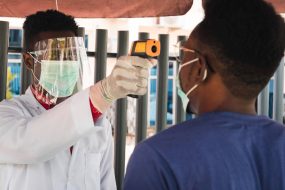
The Coalition for Epidemic Preparedness Innovations (CEPI) has committed a large amount of money to advance Minapharm’s investigational Bundibugyo ebolavirus vaccine into human testing as part of efforts to combat the ongoing Ebola outbreak.
More than 2,700 people have perished during the outbreak in recent months, with the Democratic Republic of Congo accounting for the majority of fatalities. The crisis has become the second-largest Ebola outbreak on record, prompting CEPI to seek proposals from developers working on promising vaccines against Bundibugyo ebolavirus.
Minipharm Arrives at the Scene
Egyptian pharmaceutical company Minapharm responded to the call through its Berlin-based subsidiary, ProBioGen. The companies are developing the vaccine using the modified vaccinia Ankara platform, a technology that has previously demonstrated its ability to provide durable protection against Zaire ebolavirus, a related Ebola virus.
The CEPI funding will allow Minapharm to complete preclinical development and advance the vaccine into an early human study. The Phase 1 trial will primarily examine safety and immunogenicity and is expected to be conducted in Africa.
Minapharm’s program is moving forward alongside several other experimental vaccines targeting Bundibugyo ebolavirus. CEPI has supported candidates based on the ChAdOx platform and vesicular stomatitis virus, the latter being the viral-vector technology used in an approved vaccine against Zaire Ebola. Moderna has separately received CEPI funding to investigate its mRNA technology against Bundibugyo ebolavirus.
CEPI’s Contribution Toward Tackling the Virus
The Minapharm vaccine represents the fifth Bundibugyo-specific candidate to receive CEPI backing. Its developers believe it could offer a potential advantage because it is designed to stimulate both B-cell and T-cell immune responses, potentially producing broader and more durable protection than approaches focused on a single arm of the immune system.
As several Bundibugyo vaccine programs progress toward clinical testing, CEPI has also been working to establish the infrastructure needed to conduct Phase 1 studies within Africa. Historically, early-stage vaccine trials have often relied on sites outside the continent, a pattern CEPI said has contributed to structural gaps and limited involvement from African research communities.
The total amount committed by CEPI is around $16.5M.
More About Bundibugyo Virus
Bundibugyo virus belongs to the group of Ebola viruses capable of triggering major outbreaks among humans. Scientists first identified the virus during an outbreak in Uganda’s Bundibugyo district in 2007, before it was linked to another outbreak in the Democratic Republic of Congo (DRC) in 2012.
The outbreaks recorded in Uganda and the DRC had case-fatality rates of approximately 30% and 50%, respectively.
Unlike the Zaire Ebola virus, for which both vaccines and targeted treatments are available, Bundibugyo virus disease currently has no greenlit vaccine or disease-specific therapy. Treatment therefore centers on supportive medical care, with prompt diagnosis and treatment associated with better survival prospects.
Bundibugyo virus disease is caused by an orthoebolavirus and is thought to originate from animals. Fruit bats are considered a possible natural reservoir of the virus. Symptoms typically appear between two and 21 days after a person becomes infected. Early signs can include headache, fever, sore throat, fatigue and muscle pain.
CEPI is providing up to $16.5 million to Minapharm Group to advance an experimental vaccine targeting Bundibugyo ebolavirus toward human clinical trials.
The funding is intended to help move the experimental vaccine through the remaining preclinical steps required before human testing. Researchers will need to generate sufficient safety and immunogenicity data before the candidate can enter a Phase 1 study.
Phase 1 Trial Preparation
The planned early-stage clinical trial will primarily assess safety, tolerability, and the immune response generated by vaccination. Researchers will closely monitor participants for adverse events and measure immune markers following administration.
Importance of Local Clinical Research
Conducting clinical research in Africa could provide valuable experience and infrastructure for responding to future outbreaks. Local investigators and healthcare institutions can play an important role in recruitment, monitoring, laboratory testing, and community engagement.
Addressing a Vaccine Gap
Several Ebola virus species exist, and vaccines developed for one species may not provide adequate protection against another. Developing a vaccine specifically targeting the strain responsible for an outbreak can therefore help address an important preparedness gap.
CEPI’s Role in Pandemic Preparedness
The program reflects CEPI‘s broader mission to accelerate vaccines against epidemic and pandemic threats. Moving promising candidates into clinical testing can help create medical countermeasures before future outbreaks become even more difficult to control.