- Home
- Technology and AI
- Anthropic Expands Into Physica ...

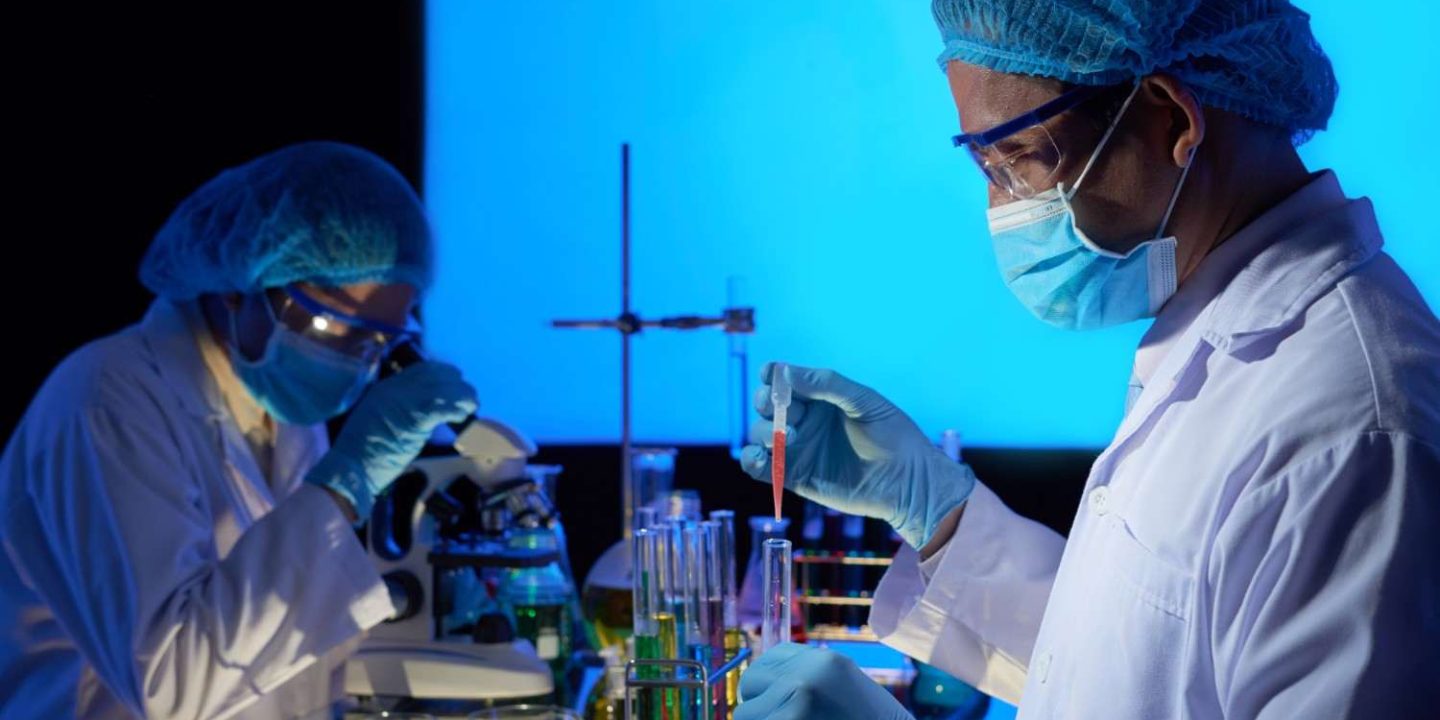
Anthropic has established a wet laboratory in the San Francisco Bay Area as the artificial intelligence company expands its work in life sciences and explores how AI can be used to accelerate biological research.
The company confirmed the existence of the lab to Reuters, marking a move beyond computer-based biological modeling into physical experimentation. Anthropic has said its broader life sciences efforts are aimed in part at developing treatments for rare diseases and conditions that have historically received limited pharmaceutical investment.
- Anthropic has established a wet lab in the San Francisco Bay Area for physical biology experiments.
- The company says real-world laboratory work remains an essential part of biological research.
- Anthropic is developing systems that can work with automated laboratory equipment and potentially direct robotic experiments.
- The company is focusing its life sciences work on areas including rare and historically difficult-to-treat diseases.
- Anthropic has acquired Coefficient Bio and launched Claude Science as part of its expanding scientific research efforts.
- The company says it is not currently running clinical trials and intends to work alongside pharmaceutical and biotechnology companies.
Anthropic Moves Beyond Computer-Based Biology
Anthropic’s new facility represents an expansion of its life sciences strategy from computational research into physical laboratory work.
Eric Kauderer-Abrams, Anthropic’s head of life sciences, confirmed the wet lab in an interview with Reuters. He said the company is conducting some biological experiments internally while also working with outside partners.
Kauderer-Abrams said physical laboratory work remains an essential part of biology because computational predictions ultimately need to be tested experimentally.
An Anthropic spokesperson subsequently clarified that the facility is not specifically being used for drug discovery, although the company did not provide additional details about its activities.
AI and Laboratory Automation
A major component of Anthropic’s life sciences strategy involves connecting AI systems with laboratory automation.
According to people familiar with the company’s work cited by Reuters, Anthropic is exploring how its Claude models can direct robotic systems to carry out scientific experiments with limited human intervention.
Kauderer-Abrams described AI-driven laboratory automation as being in its early stages. Anthropic has emphasized that human oversight remains necessary, particularly because biological experimentation can involve significant safety considerations.
The company has also introduced a Model Hardware Standard intended to help AI systems interact with laboratory equipment, further connecting its software capabilities with physical scientific workflows.
Focus on Rare and Difficult-to-Treat Diseases
Anthropic has said it wants its life sciences work to address medical problems that may not attract sufficient investment from conventional pharmaceutical companies.
Kauderer-Abrams previously said the company intends to conduct preclinical research in areas where traditional drug developers may face weaker financial incentives.
The company has discussed the potential for AI to assist with difficult biological problems, including the development of complex molecules such as bispecific and trispecific antibodies. These therapies can be designed to act on multiple biological targets.
However, Anthropic has not publicly disclosed specific drug candidates or provided details about the progress of any individual therapeutic program.
Coefficient Bio Acquisition Adds Drug Development Expertise
Anthropic has been building its life sciences capabilities through both internal development and acquisitions.
The company confirmed its acquisition of Coefficient Bio, a biotechnology-focused startup whose technology is intended to support drug development. Media reports have valued the transaction at approximately $400 million in stock, although Anthropic has not publicly confirmed the purchase price.
Anthropic has also expanded its scientific leadership. Novartis CEO Vas Narasimhan joined the company’s board as it increased its focus on applications of AI in biology and medicine.
Claude Science Expands Research Capabilities
Anthropic launched Claude Science in June as a research-focused product designed to support scientific workflows.
The company has subsequently reported that Claude can help optimize computational models used for biomolecular research. Anthropic said Claude Science was used to optimize more than 30 open-source biomolecular models in less than four weeks, with the optimized models running roughly four times faster on average.
Anthropic has also launched a Life Sciences Verification Program that gives approved life sciences organizations access to its Mythos, Opus and Sonnet models with safeguards specifically adapted for biology-related work. The program covers applications including drug discovery, research biology, clinical development and manufacturing.
Partnerships With Major Pharmaceutical Companies
Anthropic is simultaneously providing AI technology to established pharmaceutical companies.
Its customers and partners include Genentech, Bristol Myers Squibb and Novo Nordisk. The company has positioned its pharmaceutical relationships as collaborations in which AI tools can support existing research and development operations rather than replace the companies developing and commercializing medicines.
That approach is also intended to address potential concerns among pharmaceutical customers about working with an AI company that is developing its own capabilities in biology.
Anthropic has said it has established boundaries around customer data and is not currently running clinical trials. Kauderer-Abrams told Reuters that the company does not intend to compete directly with pharmaceutical and biotechnology companies whose businesses center on bringing medicines to market.
Safety Remains a Central Consideration
Anthropic’s expansion into physical biology comes as the company faces broader scrutiny over the potential risks associated with increasingly capable AI systems.
The company has previously warned about the possibility that advanced AI could be misused for biological weapons development. At the same time, Anthropic is expanding access to models capable of supporting professional biological research through programs with additional safeguards.
The company says its approach is to balance the potential for AI to accelerate scientific research with controls intended to limit misuse. Its life sciences verification program is one example of that approach, restricting access to certain biology capabilities while providing approved researchers with more specialized models.
Anthropic’s Life Sciences Program Continues to Expand
Life sciences has become one of Anthropic’s largest areas of investment by staffing and resources, according to Kauderer-Abrams.
The new wet lab gives the company an in-house setting for physical biological research while allowing it to continue using external partners where that is more efficient. Anthropic is also hiring personnel with expertise in areas such as protein and nucleic acid characterization and laboratory operations.
The company has not yet disclosed a specific therapeutic pipeline or indicated when any Anthropic-originated drug candidate could enter human testing.
For now, its strategy centers on combining Claude’s computational capabilities with laboratory experimentation, automation and partnerships with established life sciences organizations as it expands its presence in drug research and biological science.
Anthropic is expanding its presence in life sciences with a new physical biology laboratory in the San Francisco Bay Area.
Physical Biology and AI Research
The new wet-lab facility represents a shift from purely computational research toward experiments involving real biological systems. Physical testing can help researchers evaluate whether predictions generated by advanced AI models translate into measurable biological effects.
Laboratory Automation
Modern biology laboratories increasingly use automated instruments to handle repetitive tasks such as liquid transfer, sample preparation, imaging and data collection. Connecting these systems with AI could help researchers coordinate multiple experimental steps more efficiently.
AI-Driven Drug Discovery
Artificial intelligence is being used across several stages of drug development, including target identification, molecular design, protein analysis and experimental planning. Combining computational models with laboratory testing can create a continuous cycle in which experimental results inform subsequent predictions.
Importance of Experimental Validation
Computer models can identify promising biological hypotheses, but laboratory experiments remain essential for testing those predictions. Physical experiments can reveal unexpected interactions, limitations or biological responses that may not be captured by computational systems.